Optimizing The Customer Experience
Leading Role in CX Transformation in Insurance
Digital Experience Architect (Official Title),
Strategic Lead in CX, Team Lead, Journey Ownership (Billing and Payments)
State Farm
Customer Experience, Strategy, Service Design, Design Thinking,Personas, Journeys, Facilitation, Immersive Research
April, 2019
How I used human-centered methods in strategic planning at the largest auto insurance company in the nation.
In 2019-2020, State Farm’s UX Center of Excellence initiated a commitment to humanizing data and building empathy through the use of Enterprise Personas, Journeys, and Service Blueprints. These artifacts were often key components in the company’s emphasis on creating more meaningful collaborations around the customer experience and reducing waste in strategic planning activities. Additionally, the company sought to transform the customer experience through enhanced human-centered practices and advancements in technology.
I was asked to play a lead role, as a Digital Experience Architect (a Principal role) in an initiative called CX Optimization. This initiative was a key pillar of CX transformation, which encompassed CX Vision, Culture, and Measurement efforts. These efforts would introduce new ways of working that would drive horizontal strategic planning in digital, supporting goals to enhance the journeys for shopping, billing and payments, claims, and retention experiences.
This case study tells the story of how I led a large cross-functional team in the assessment of critical business decisions that did not consider the needs, wants, and expectations of customers. It highlights my ability to adapt a process, develop mechanisms for change, facilitate and align, and influence business decisions, while recommending actions to optimize the customer experience.
State Farm had spent years planning to implement changes to backend systems in an effort to “modernize” how insurance policies are created and managed. This modernization was viewed as necessary for the company to remain competitive in pricing and coverage.
However, executive leadership had concerns with these decisions and the potential risk to customers.
Modernization was intended to change the way the company did business, supporting efforts to advance the usage of online technology and retain market dominance.
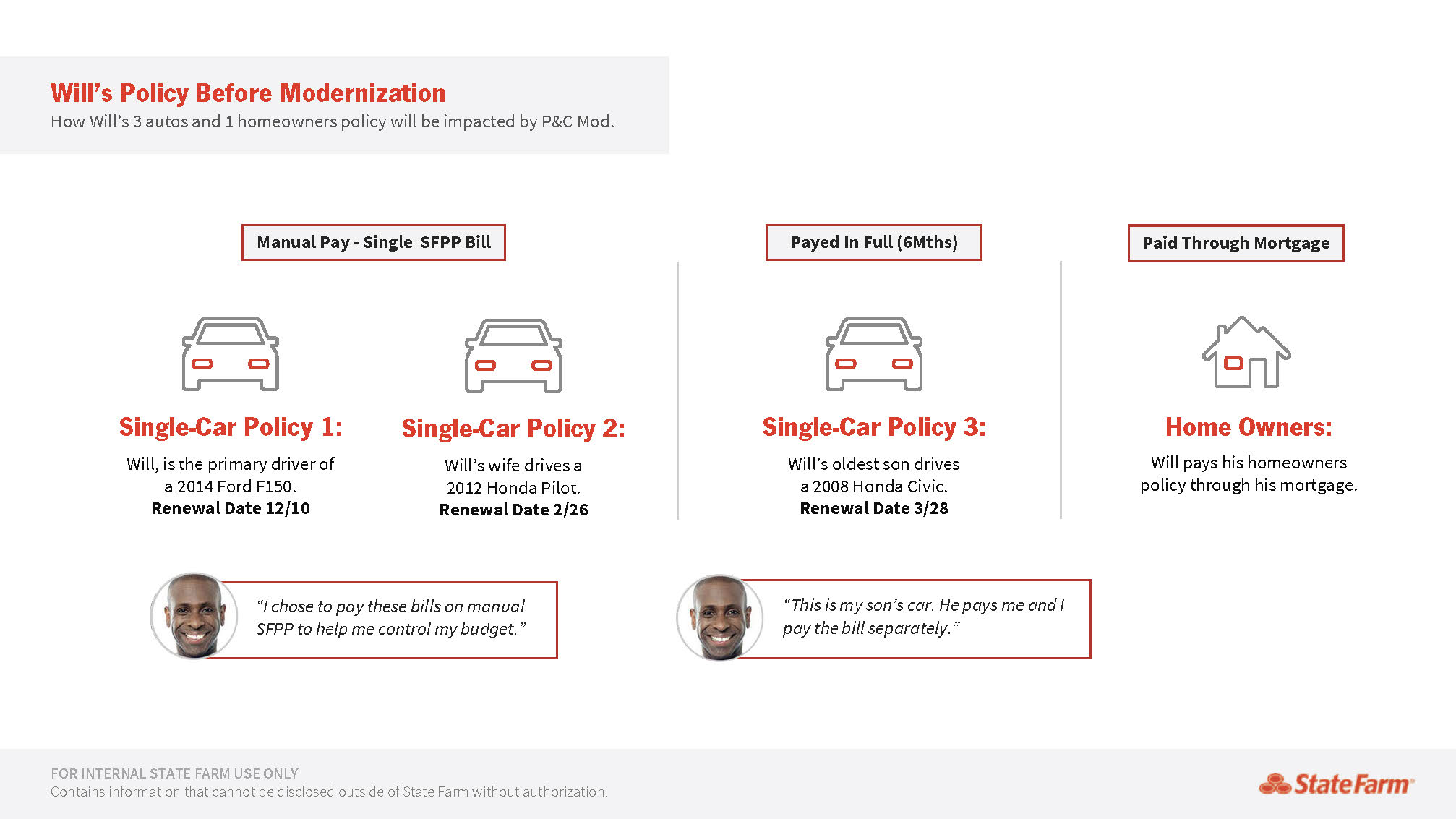
Those changes would affect customers who had multiple, single-car policies, paid on different billing cycles, and a home that was insured. A very common policy mix for the company’s core customer base.
As systems modernized over time, changes would gradually impact the customer, reducing trust, satisfaction, and driving defection.
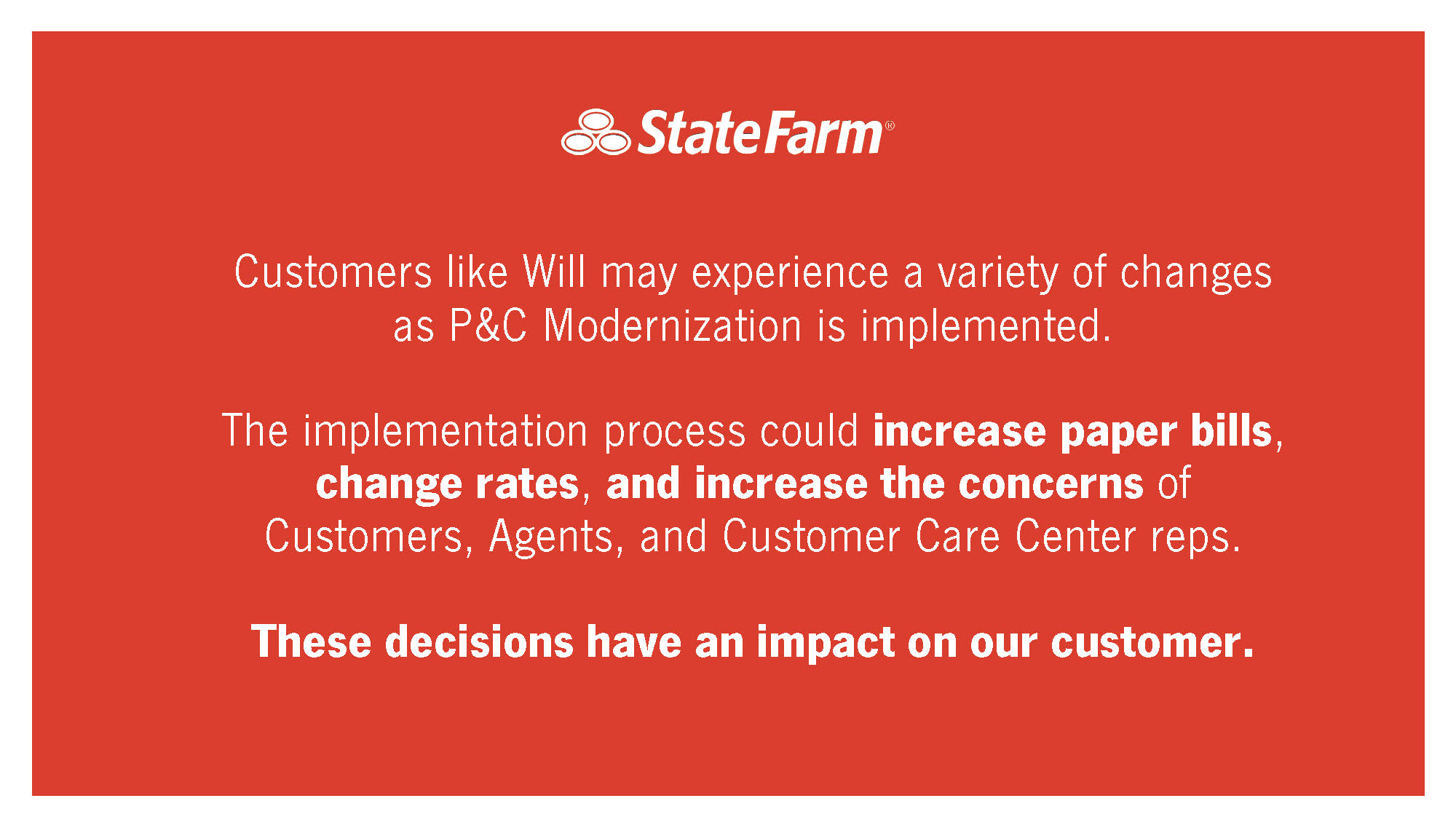
Customers with multiple vehicles and a home would receive increased paper bills over a 6-12 month period.
Rates had the potential to hit a 10% increase. This percentage has historically driven customer defection.
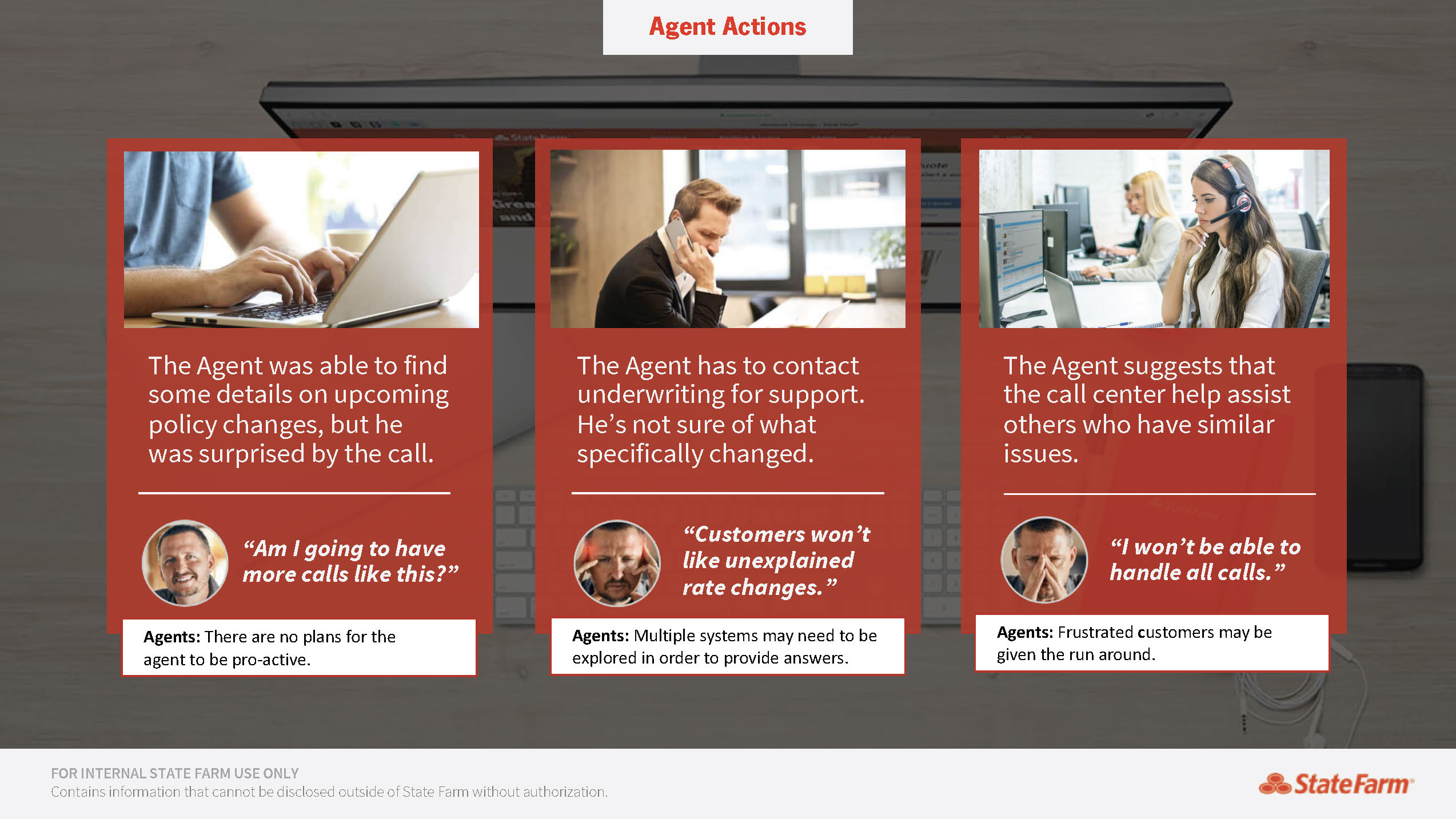
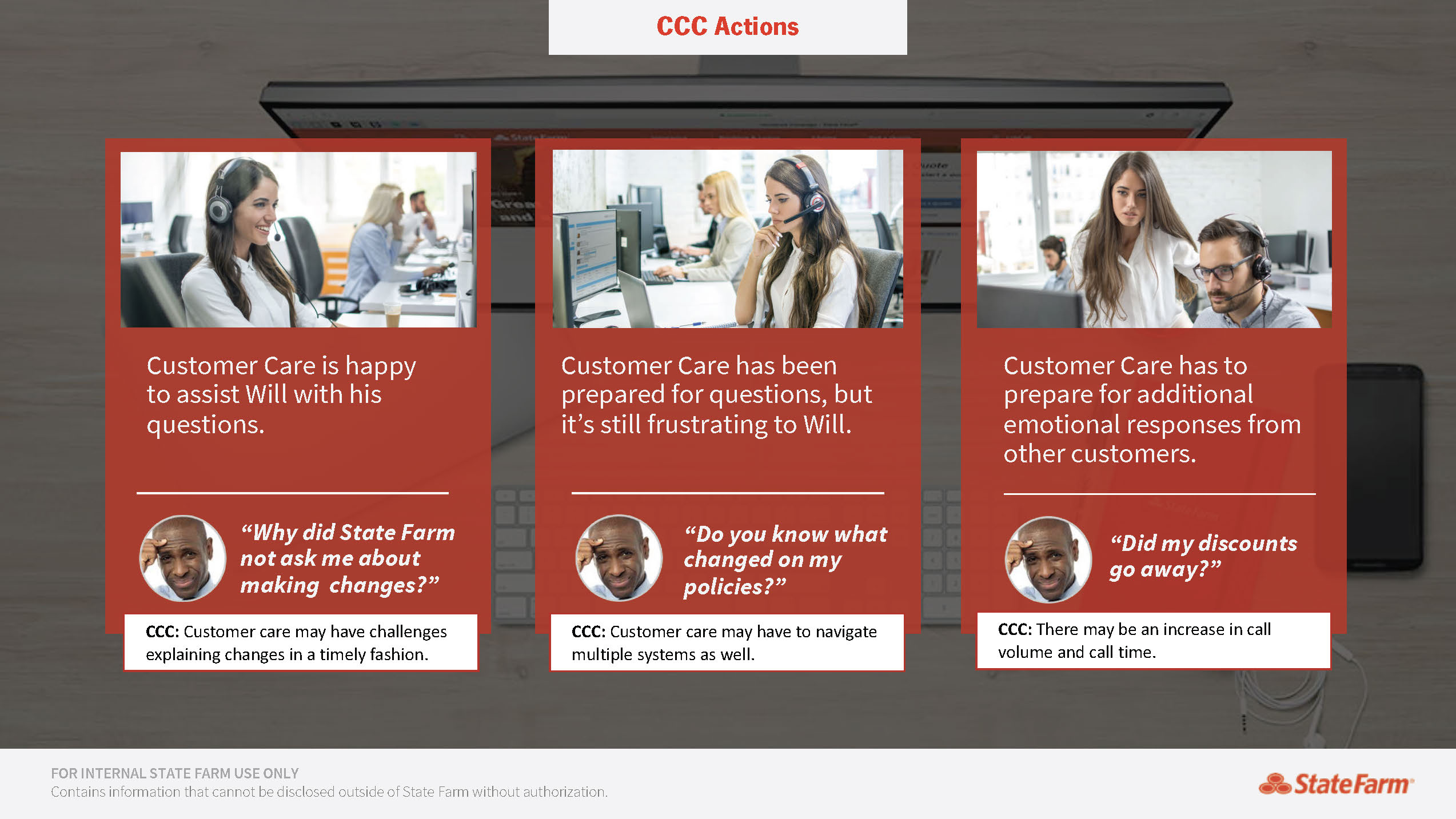
Customers would likely contact their agents or call centers, seeking answers to questions with no clear explanations.
This task would span Customers, Agents, and Call Center Reps. I would have to track requirements across several domains, determining the sequence of implementation, and aligning the implementation to customer insights that would help the company see the risk associated with changes.
I developed and led a plan to use personas and journeys to increase interest and drive an engagement strategy in a 30-day timeframe.

I began with a collection of 40 + sources that described planned implementation, customer shopping, and defection behaviors.

I focus my stakeholders on a
“Relationship Seeking” segment represented 36% of those who would be impacted by the changes.

I used secondary sources to develop 3 customer journey maps aligned to the sequence of events across implementation.

I facilitated an 8-hour workshop using the journeys to align stakeholders on assumptions, build empathy, and influence actions.
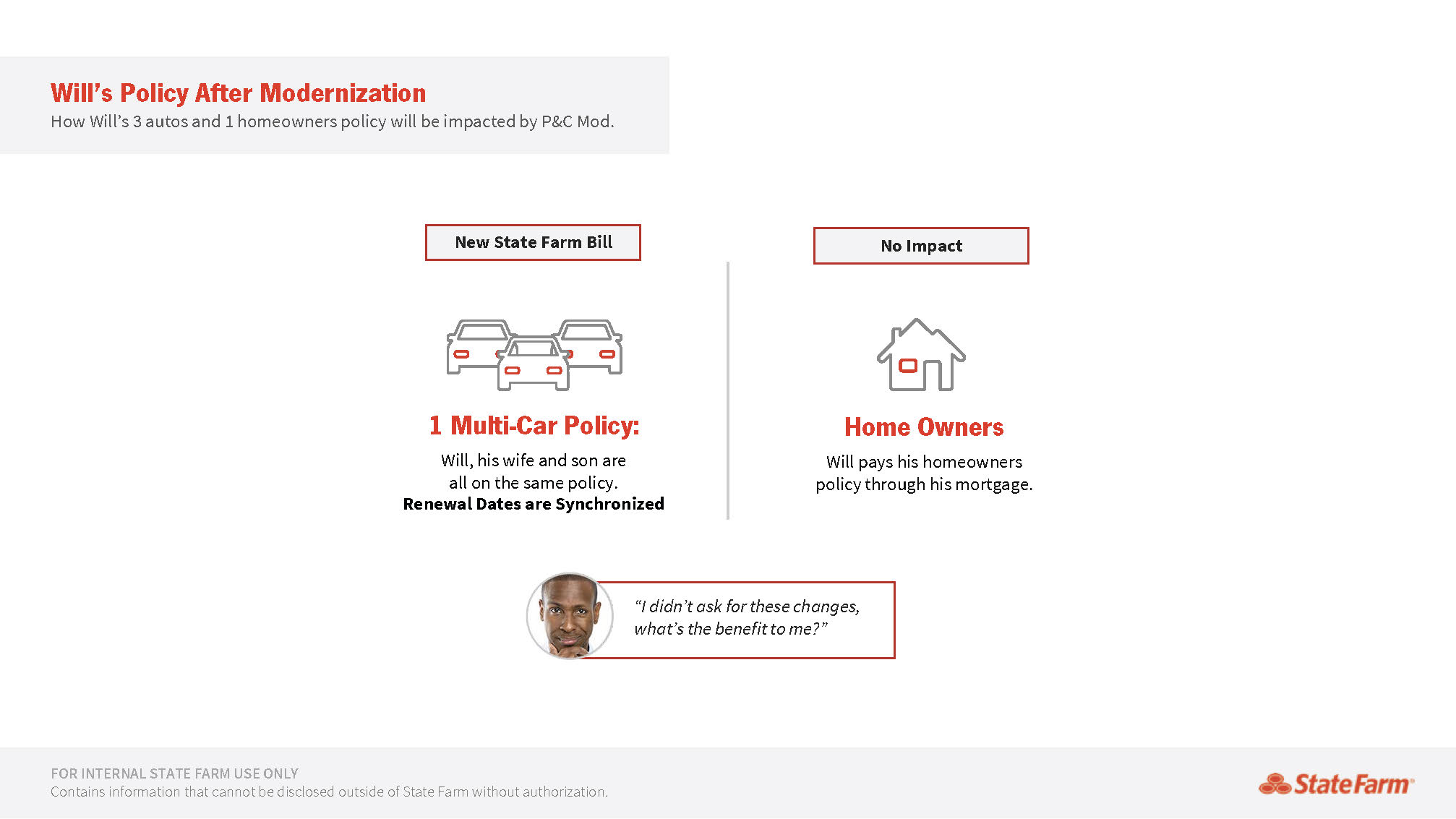
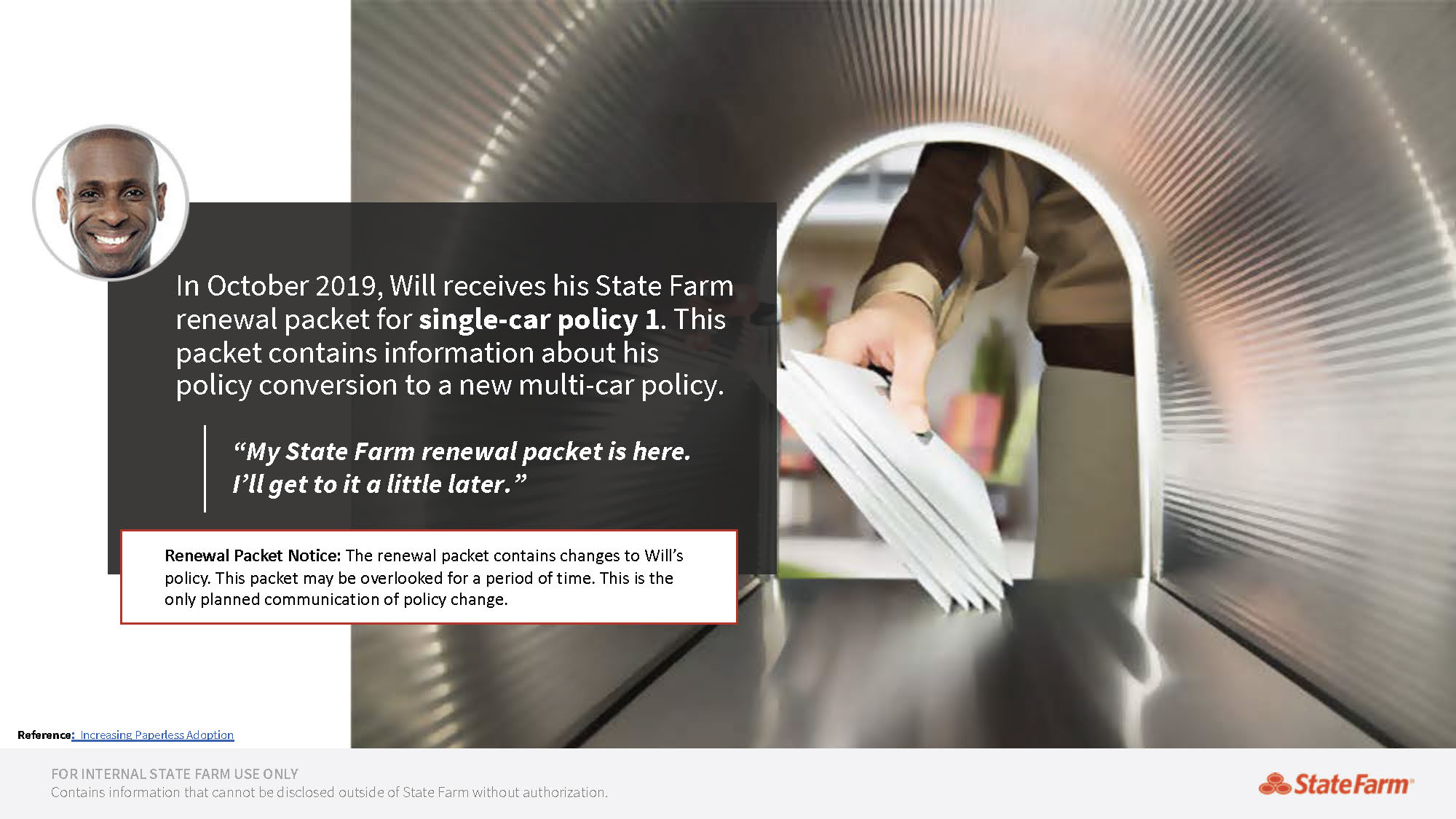
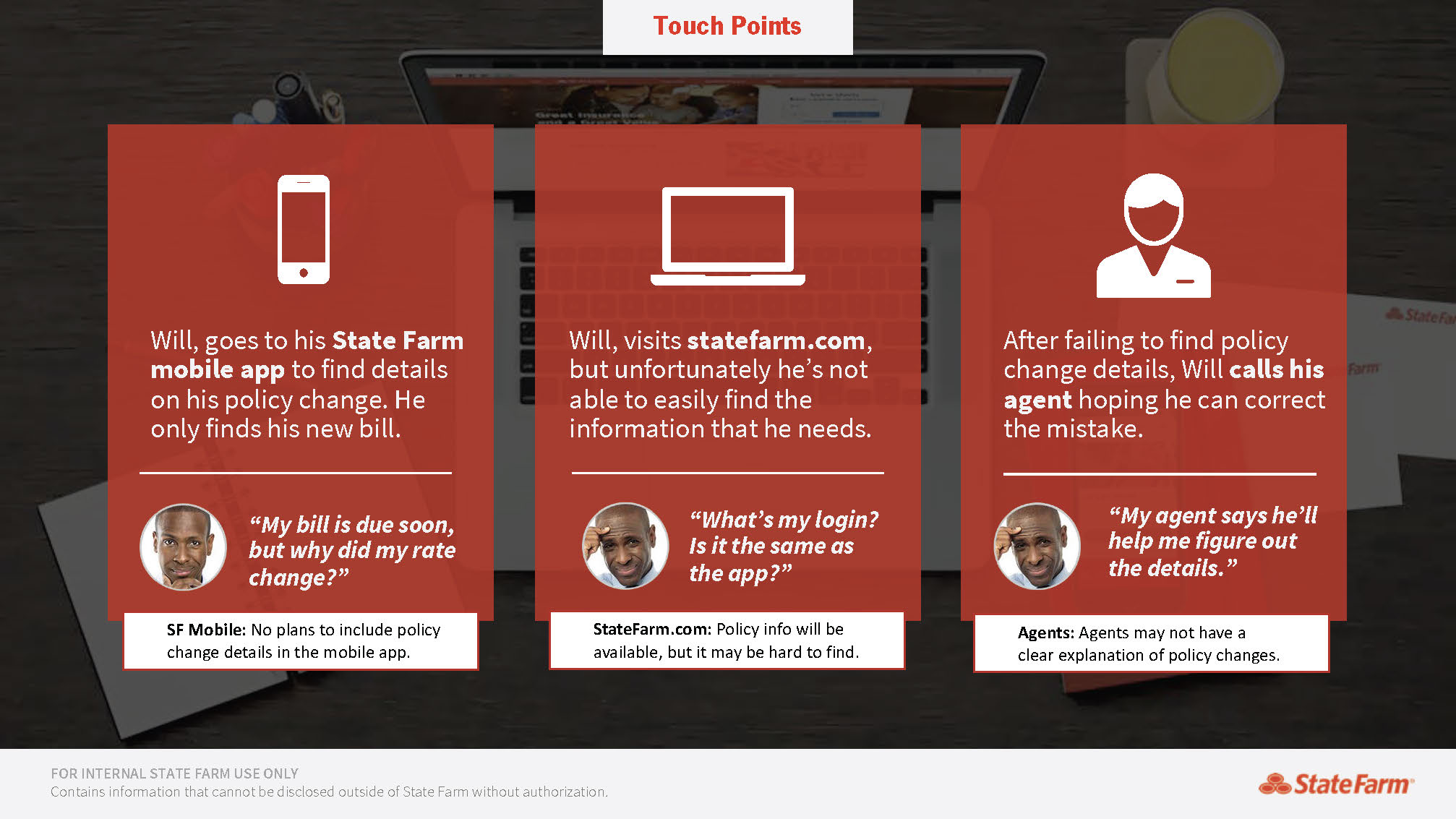
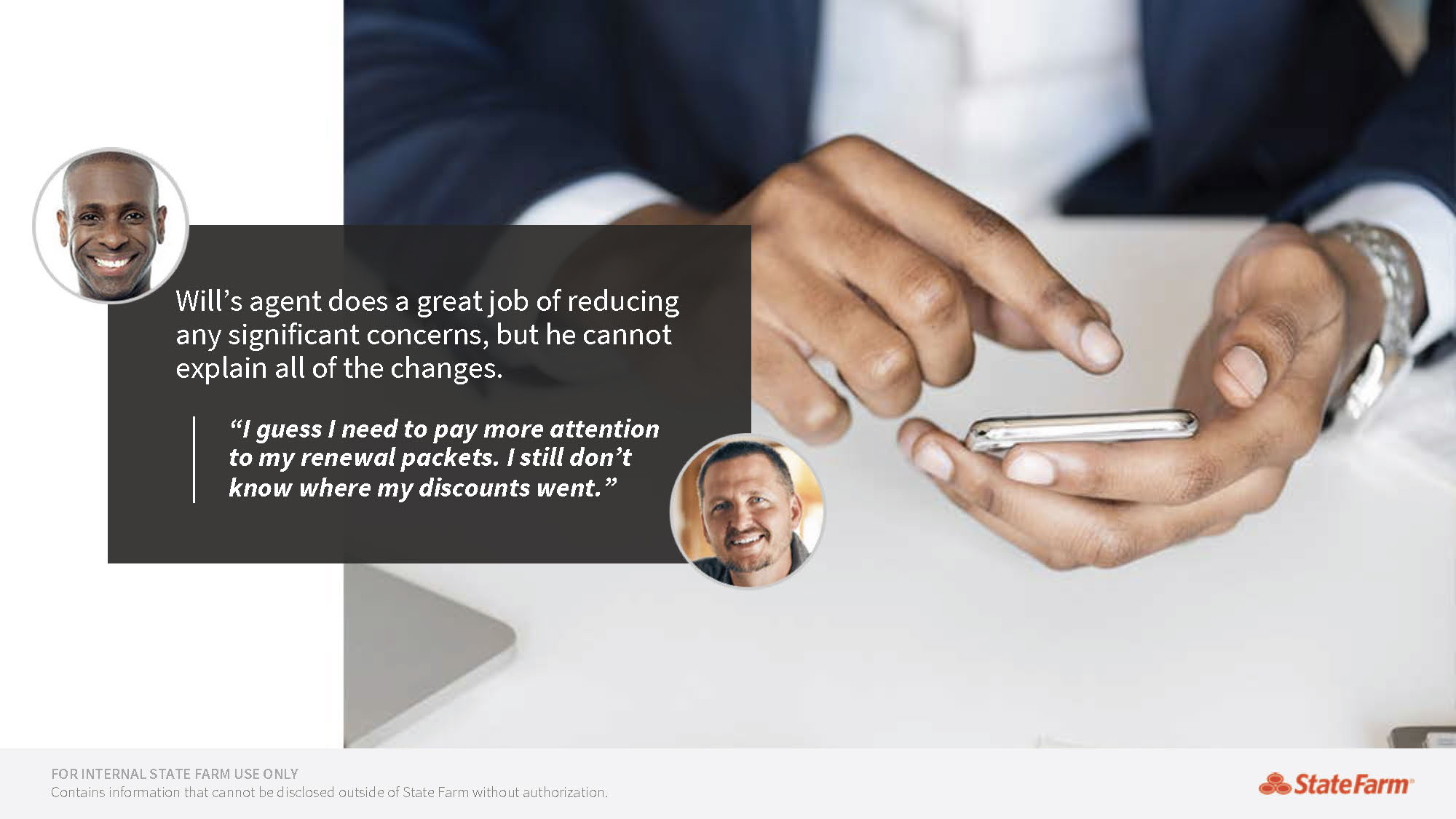
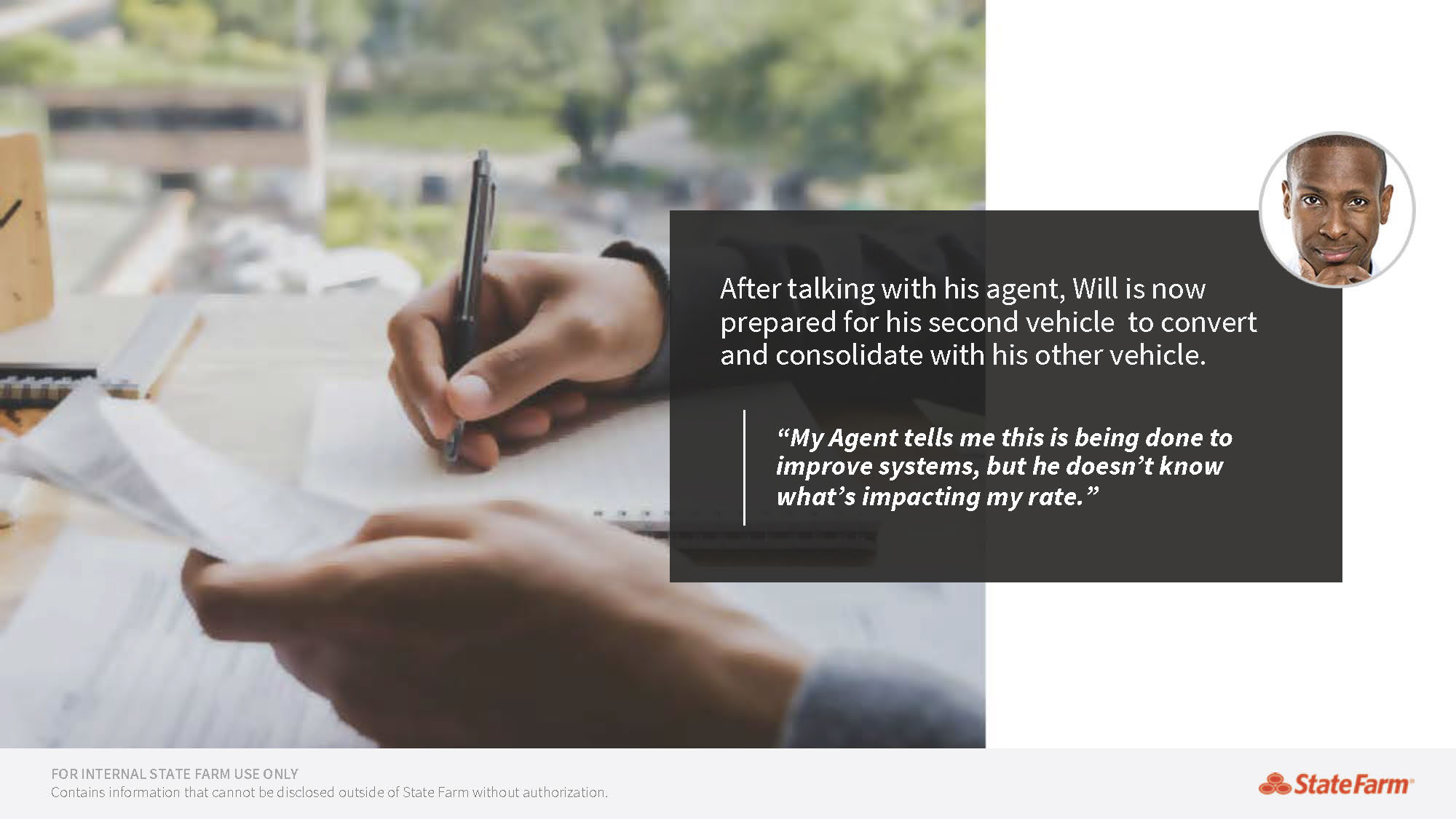
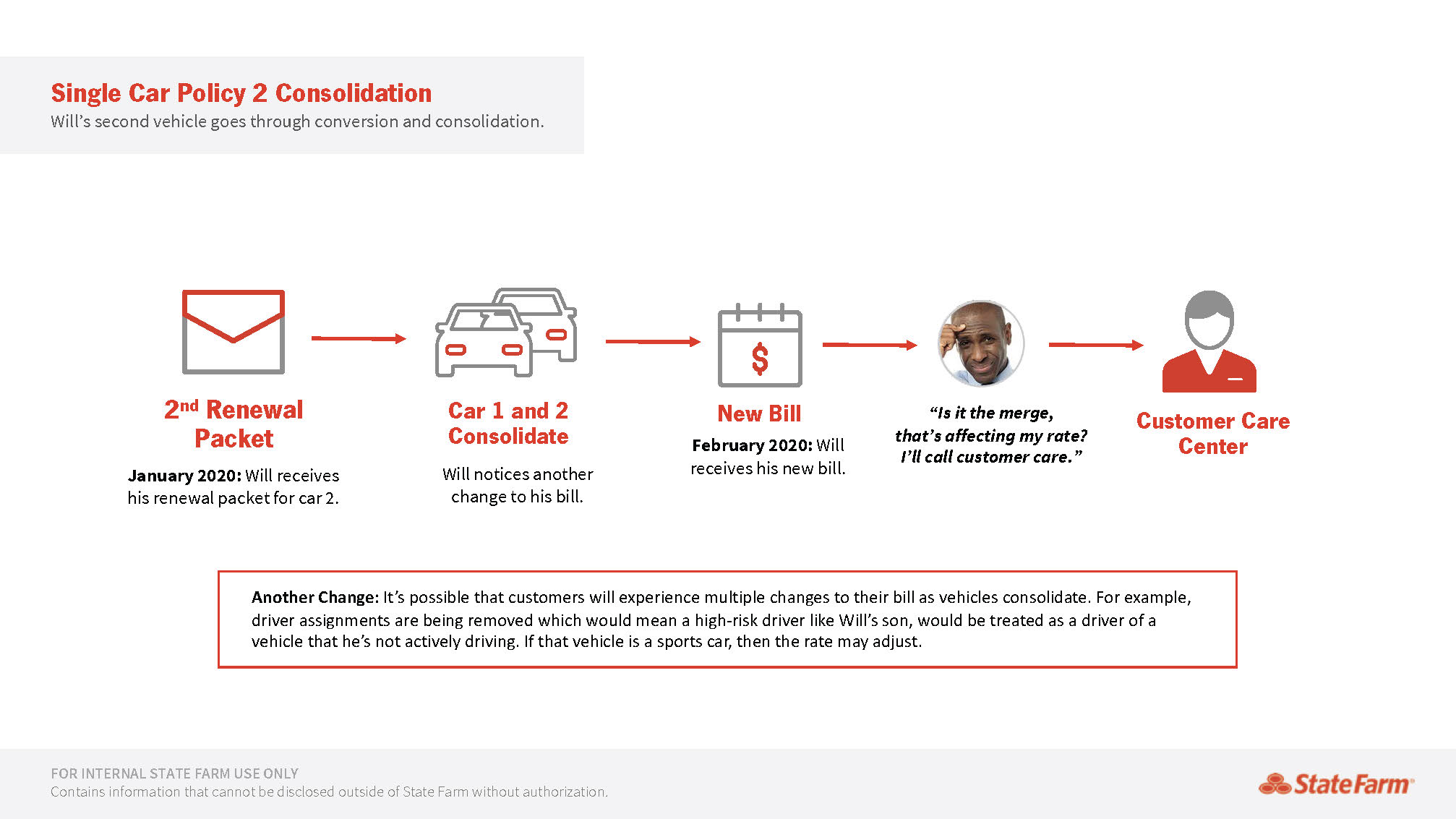
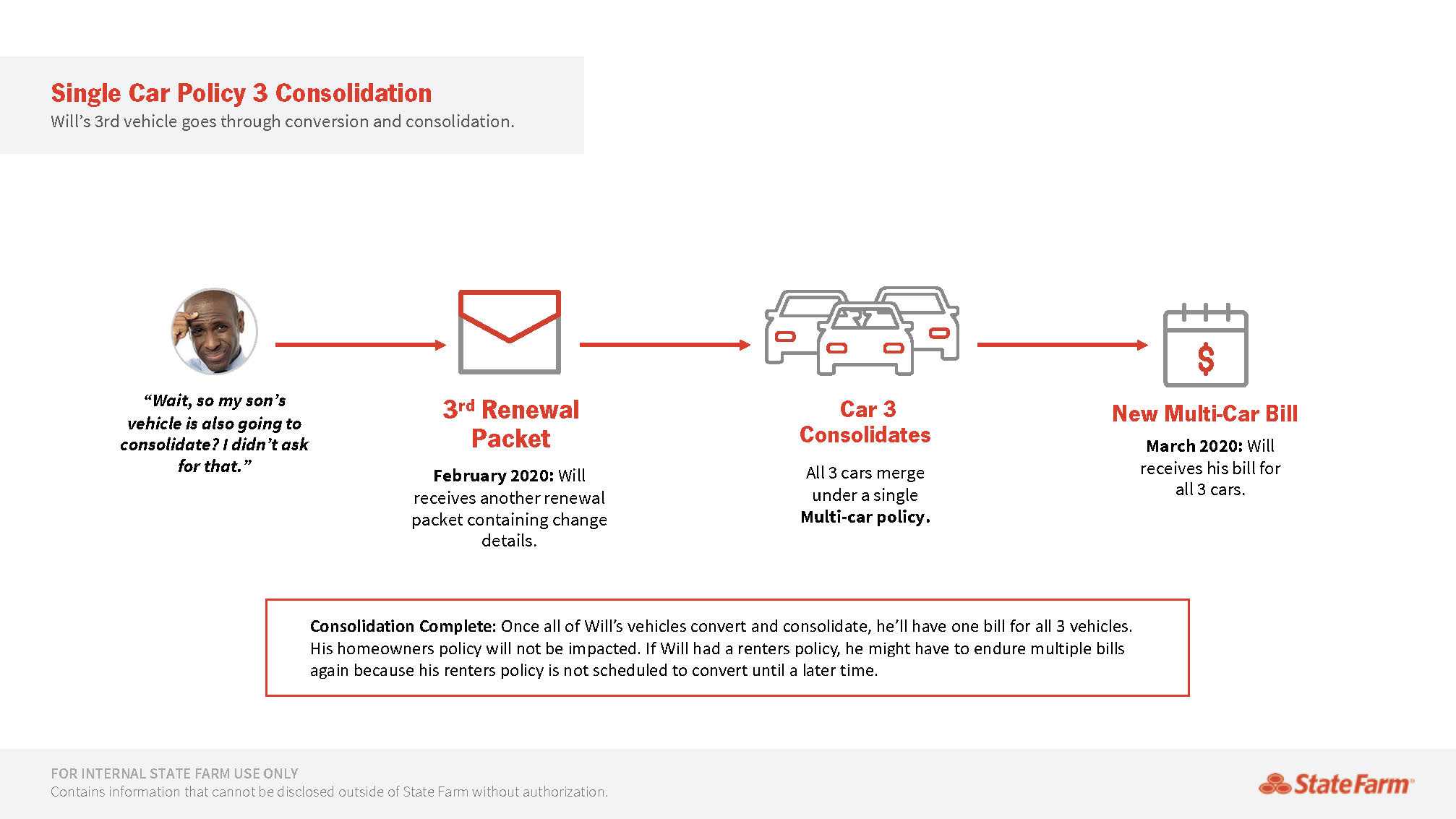
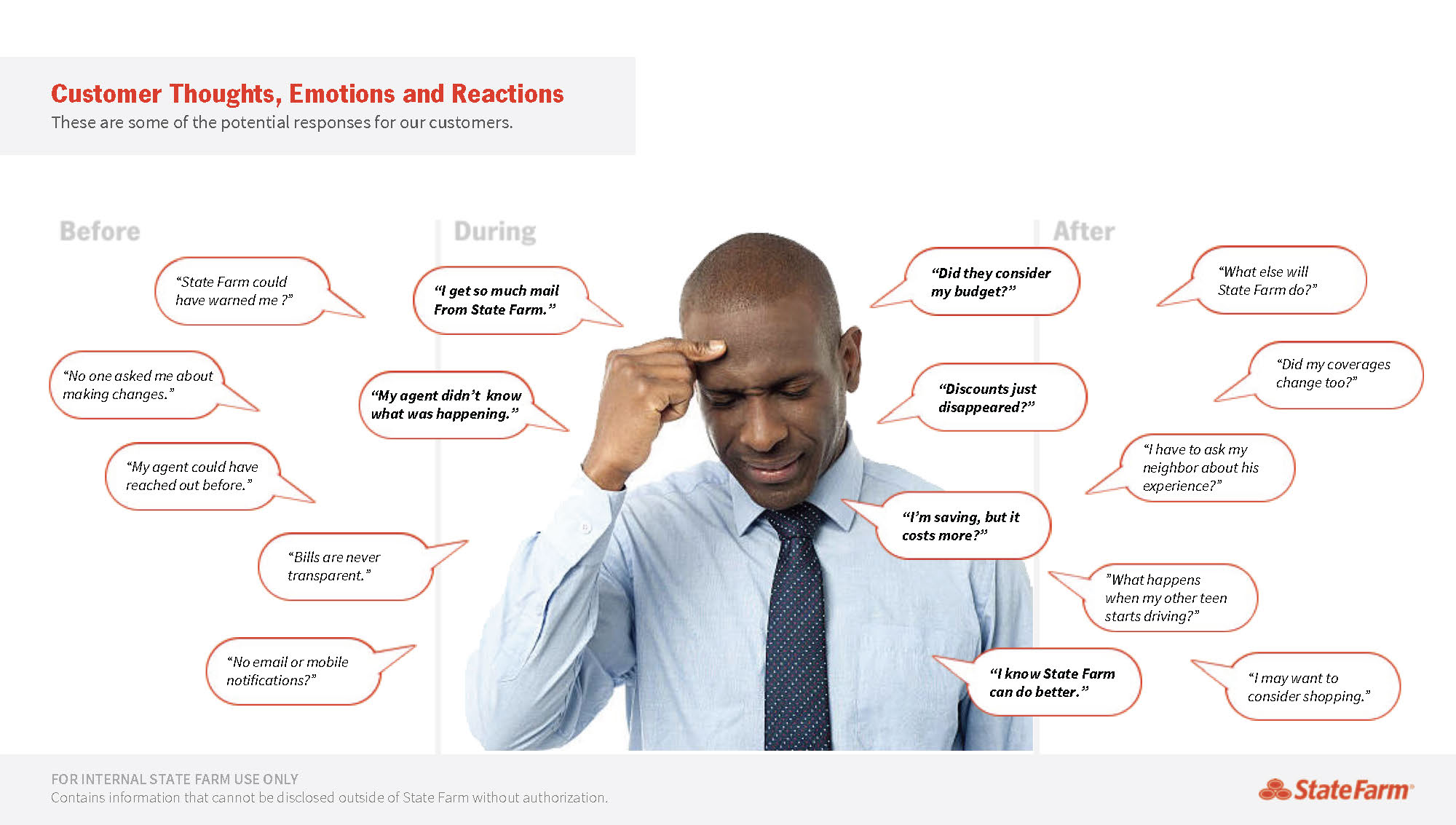
I created “Will’s Journey”, a narrative built on early insights, and a step-by-step walk-through depicting the “experience” in a relatable form …
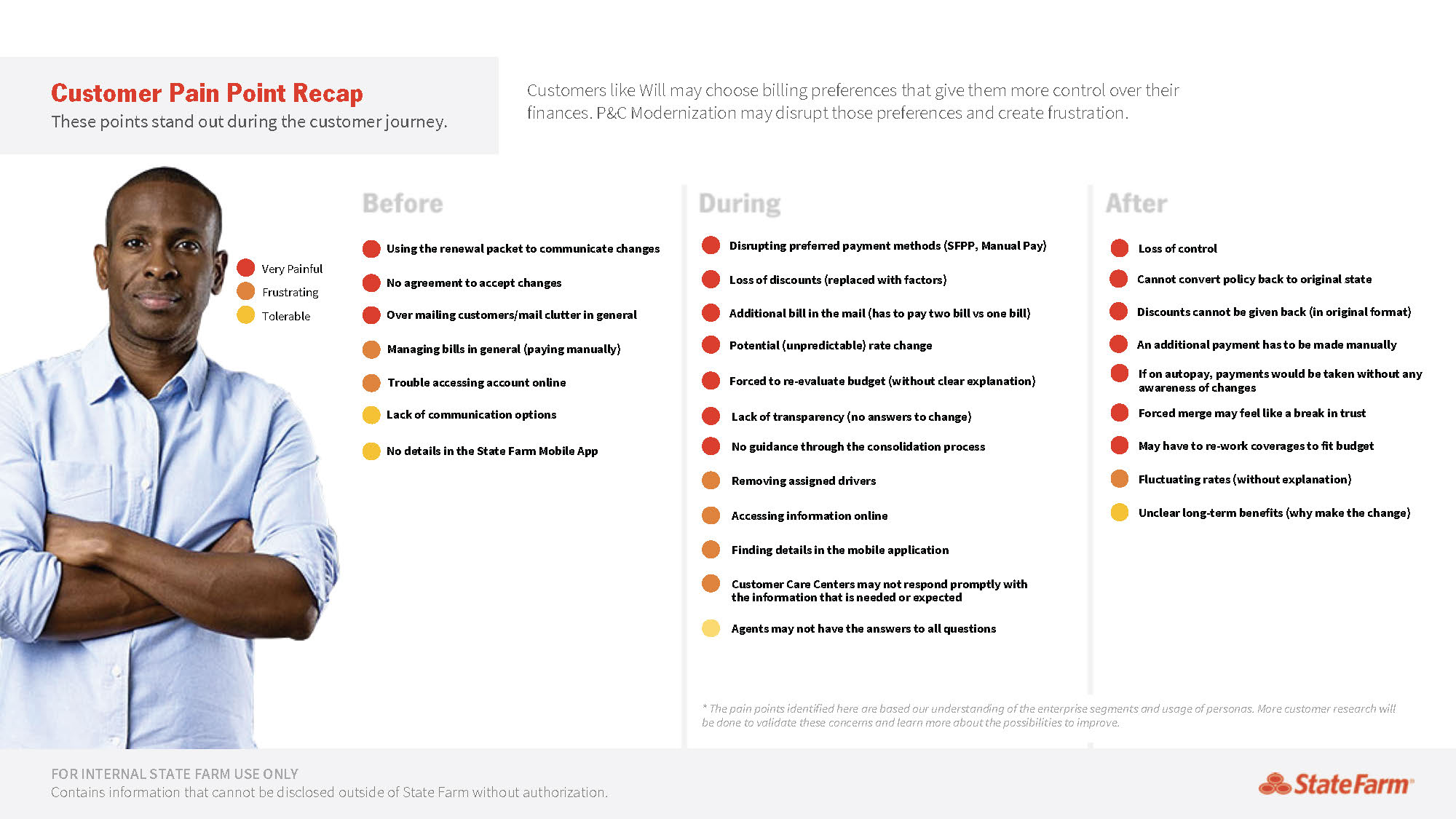
Will’s journey was complemented by a detailed mapping of the experience connecting customers like him to the business’ proposed implementation timeline.

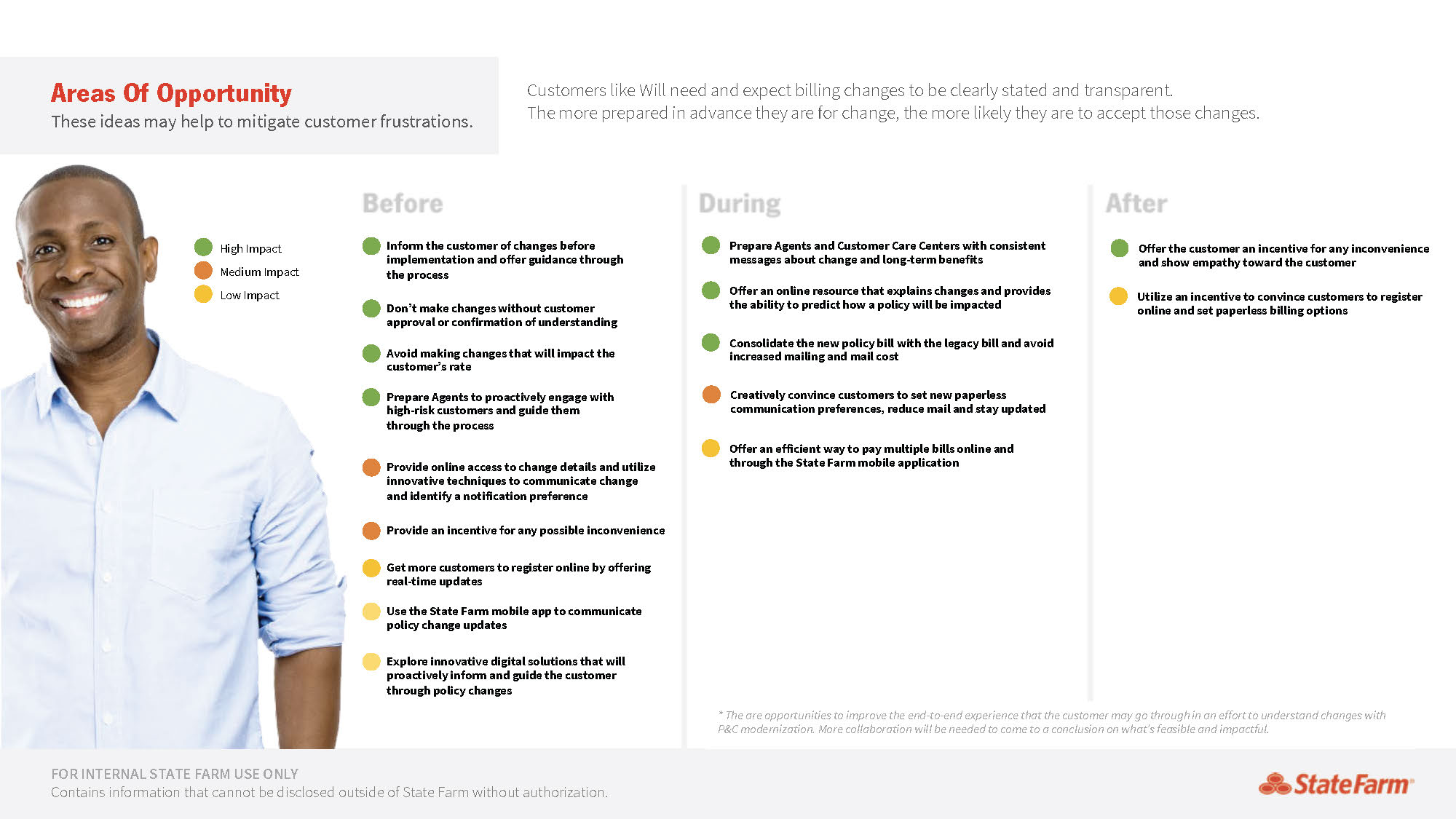
The highlight of this work effort was the 8-hour workshop that I planned and facilitated with research partners. I proposed using a journey map with 40+ stakeholders, tasked with assessing and building on pain points and opportunities. This would prompt investment in more research and initiatives to address risk.
I led the execution of research artifacts supporting a larger effort to confirm customer impacts …
My team and I worked with researchers to develop an immersive walk-through of the experience, creating a fictional insurance company, fictional artifacts (bills, renewal docs), and initial ideas to reduce customer pain. The research was implemented through a moderated, role-playing activity with over 30 potential customers.
This activity helped to confirm initial risk and to identify potential solutions.

I proposed a future state using ideas from stakeholders and feedback from customer research …
This future state depicted how I would want customers to experience modernization, minimizing impacts while still allowing the company to move forward with implementation. This approach maintained the organization’s strategic goals to move to policy systems that would enable technology advancement, while staying true to the core customer base.


The story of customers like Will, supporting research and stakeholder alignment, sparked immediate action …
The result of careful planning and execution delivered a future state representation of 5 mitigation strategies, coordinated in a way that would create awareness, communicate changes, provide options to avoid change, and retain customers. Strategies owned by other product teams helped deliver on the following:
Additionally, this contributed to my role being aligned to Experiences vs Products, and the exploration of Journey Ownership and Management.